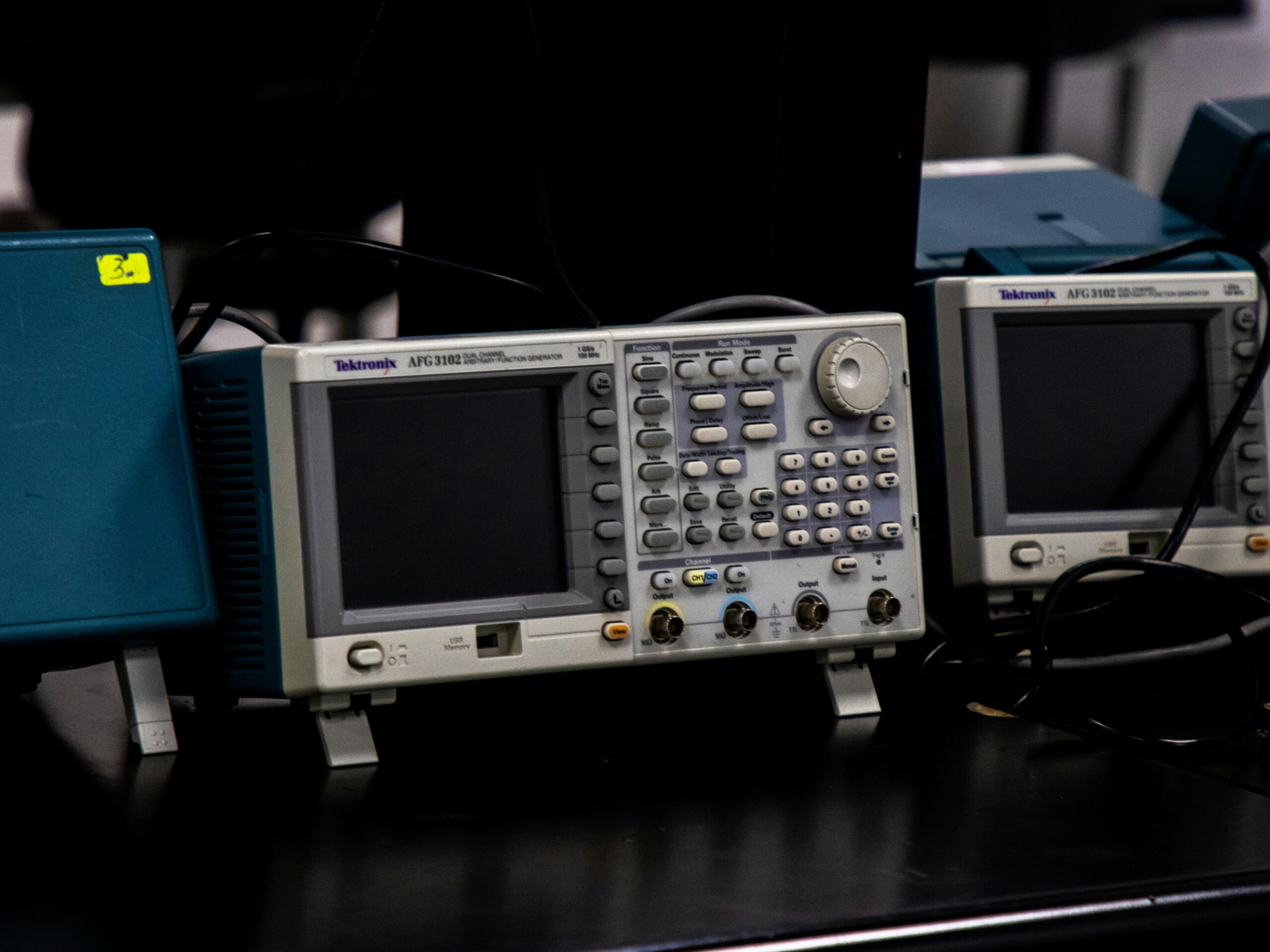
Precision isn’t just a goal—it’s the foundation of reliable data analysis. Understanding reference standard deviations transforms how you approach measurement accuracy and consistency in any field.

🎯 The Critical Role of Reference Standard Deviations in Modern Analysis
In today’s data-driven world, the difference between acceptable and exceptional results often comes down to one crucial metric: reference standard deviation. This statistical measure serves as the benchmark against which all variations are compared, providing a framework for understanding what constitutes normal variability versus significant deviation.
Reference standard deviations represent the expected level of variation within a controlled, standardized system. Unlike simple standard deviations calculated from your immediate dataset, reference standards are established through extensive validation studies, often involving multiple laboratories, instruments, and operators over extended periods.
Organizations that master the application of reference standard deviations gain a competitive advantage through enhanced quality control, reduced measurement uncertainty, and improved decision-making capabilities. Whether you’re working in clinical diagnostics, manufacturing quality assurance, environmental monitoring, or research laboratories, these standards become your roadmap to consistency.
📊 Understanding the Fundamentals: What Makes Reference Standards Different
Reference standard deviations differ fundamentally from regular standard deviations in their purpose and derivation. While a standard deviation simply measures dispersion in your current data, a reference standard deviation represents the established, expected level of variation for a particular measurement system under optimal conditions.
These reference values are typically derived from:
- Interlaboratory comparison studies involving multiple facilities
- Long-term stability assessments using certified reference materials
- Manufacturer specifications based on extensive validation protocols
- Industry consensus standards developed by professional organizations
- Historical performance data from well-controlled measurement systems
The power of reference standard deviations lies in their objectivity. Rather than asking “How much variation do we see?” they answer “How much variation should we expect?” This shift in perspective transforms quality control from reactive troubleshooting to proactive performance optimization.
The Mathematical Foundation Behind Reference Standards
Reference standard deviations are calculated using rigorous statistical methodologies that account for multiple sources of variation. The most common approach involves pooling data from multiple measurement sessions, removing outliers through established protocols, and calculating the combined variance across all contributing factors.
The formula incorporates both within-run precision (repeatability) and between-run precision (reproducibility), providing a comprehensive picture of expected measurement variability. This holistic approach ensures that your reference standards reflect real-world operational conditions rather than idealized laboratory scenarios.
🔬 Practical Applications Across Industries
The versatility of reference standard deviations makes them invaluable across diverse sectors. Each industry adapts these principles to address specific challenges and regulatory requirements.
Clinical Laboratory Medicine: Ensuring Patient Safety
In clinical laboratories, reference standard deviations form the backbone of quality control programs. Every test result that influences patient care must fall within acceptable limits defined by these standards. Laboratories use reference values to establish control charts, validate new instruments, and ensure consistency across testing platforms.
When a glucose measurement shows 100 mg/dL with a reference standard deviation of 3 mg/dL, technicians immediately understand the acceptable range and can identify measurements requiring investigation. This precision directly impacts patient outcomes, guiding treatment decisions and monitoring therapeutic effectiveness.
Manufacturing Quality Control: Minimizing Defects
Manufacturing operations depend on reference standard deviations to maintain product specifications and reduce waste. Whether producing pharmaceutical tablets, automotive components, or electronic devices, these standards define the acceptable variation envelope.
Process capability indices like Cpk rely entirely on comparing actual process variation to specification limits derived from reference standards. A Cpk of 1.33 or higher, indicating that the process variation is significantly smaller than the specification range, becomes achievable only when reference standards are properly established and maintained.
Environmental Monitoring: Protecting Our Ecosystem
Environmental scientists use reference standard deviations to detect genuine changes in pollution levels, water quality, or atmospheric composition against natural background variation. Without these benchmarks, distinguishing between normal fluctuations and concerning trends becomes nearly impossible.
When measuring particulate matter in urban air, reference standards help differentiate between typical daily variations and episodes requiring public health interventions. This capability proves essential for regulatory compliance and community protection.
⚙️ Implementing Reference Standards in Your Workflow
Successfully integrating reference standard deviations into your quality system requires systematic planning and consistent execution. The following framework provides a roadmap for implementation across various organizational contexts.
Step One: Establishing Your Baseline References
Begin by identifying appropriate reference materials or comparative studies relevant to your measurements. Professional organizations often publish consensus reference values—leverage these authoritative sources rather than attempting to establish values from limited internal data.
For novel measurements lacking published references, conduct thorough validation studies involving at least 20-30 measurement sessions under varying conditions. Include different operators, instruments if available, and time periods to capture realistic variation sources.
Step Two: Creating Effective Control Charts
Control charts transform abstract reference standard deviations into visual management tools. Plot your measurements over time with control limits set at multiples of the reference standard deviation—typically 2SD for warning limits and 3SD for action limits.
These charts immediately reveal when your process drifts beyond expected variation, enabling prompt corrective action before quality issues escalate. The visual nature makes them accessible to operators at all technical levels, democratizing quality awareness across your organization.
| Control Limit | Multiple of Reference SD | Expected Frequency | Action Required |
|---|---|---|---|
| Warning (Inner) | ±2 SD | ~5% of measurements | Investigate if pattern emerges |
| Action (Outer) | ±3 SD | ~0.3% of measurements | Immediate investigation required |
| Critical | ±4 SD | ~0.006% of measurements | Stop process, complete review |
Step Three: Training Your Team for Success
Reference standards only deliver value when your team understands and applies them correctly. Develop comprehensive training programs covering both conceptual understanding and practical application. Use real examples from your operations to illustrate how reference standards prevented errors or identified improvement opportunities.
Create quick-reference guides showing acceptable ranges for common measurements, making the standards immediately accessible during routine operations. Regular refresher sessions ensure knowledge retention and provide opportunities to address evolving questions.
📈 Advanced Techniques: Maximizing Precision Through Statistical Tools
Beyond basic implementation, advanced statistical techniques amplify the power of reference standard deviations, enabling deeper insights and tighter control.
Uncertainty Budgets: Quantifying Total Measurement Confidence
Measurement uncertainty budgets incorporate reference standard deviations alongside other uncertainty sources to provide comprehensive confidence intervals. This approach recognizes that measurement quality depends on multiple factors—instrument precision, calibration accuracy, environmental conditions, and operator technique.
By calculating combined uncertainty, you move beyond simple pass/fail judgments to nuanced risk assessment. A result near a specification limit with high uncertainty requires different handling than the same result with minimal uncertainty.
Method Validation Using Reference Standards
When implementing new measurement methods or instruments, reference standard deviations provide objective validation criteria. Compare your new method’s performance against established reference values to demonstrate equivalence or improvement.
Calculate the bias (systematic difference from reference) and precision (your method’s standard deviation) relative to reference standards. Acceptable performance typically requires bias within ±1 reference SD and precision no worse than 1.5 times the reference value.
Proficiency Testing: Benchmarking Your Performance
Proficiency testing programs distribute identical samples to multiple laboratories, comparing each participant’s results against reference values. Your performance is scored using reference standard deviations—results within 2 reference SDs earn acceptable ratings, while larger deviations trigger investigation requirements.
Regular proficiency testing participation validates that your reference standards remain appropriate and your measurement systems perform comparably to peer organizations. This external verification builds credibility with customers, auditors, and regulatory agencies.
🚀 Troubleshooting Common Challenges
Even well-designed reference standard programs encounter obstacles. Recognizing and addressing these challenges proactively prevents quality compromises.
When Your Variation Exceeds Reference Standards
Consistently exceeding reference standard deviations signals underlying issues requiring investigation. Potential causes include instrument maintenance needs, calibration drift, reagent or material quality problems, inadequate operator training, or environmental condition variations.
Systematically evaluate each possibility using root cause analysis techniques. Document your investigation and corrective actions—this record demonstrates quality system effectiveness to auditors and provides organizational learning opportunities.
Updating References as Methods Evolve
Analytical methods improve over time, potentially making historical reference standards overly conservative. Periodically review your references against current literature and peer performance to ensure they remain appropriate.
When updating references, implement changes gradually with parallel monitoring periods. This cautious approach prevents inadvertent quality degradation disguised as improved capability.
Managing Multiple Reference Standards
Organizations performing diverse measurements juggle numerous reference standards simultaneously. Create centralized databases or management systems tracking all applicable references, their sources, review dates, and associated measurement procedures.
Regular audits verify that operators apply correct references to each measurement type and that all standards receive timely review and update. This systematic approach prevents the confusion and errors that accompany ad-hoc reference management.
💡 Future Trends: The Evolving Landscape of Precision Measurement
The field of reference standards continues advancing, driven by technological innovation and increasing quality expectations. Understanding emerging trends positions your organization for continued success.
Artificial Intelligence and Automated Quality Control
Machine learning algorithms increasingly monitor measurement data against reference standards, identifying subtle patterns humans might miss. These systems learn normal variation characteristics and flag anomalies requiring attention, even when individual measurements remain within control limits.
AI-driven quality systems continuously refine reference standards based on accumulated performance data, creating dynamic references that evolve with your measurement systems. This adaptive approach maintains tighter control while reducing false alarms.
Cloud-Based Reference Standard Management
Cloud platforms enable organizations to share reference standards, validation data, and performance benchmarks across multiple sites. This connectivity ensures consistency in global operations and facilitates collaborative improvement initiatives.
Real-time data synchronization means reference standard updates propagate instantly to all locations, eliminating version control issues and ensuring everyone works from current information.
Enhanced Traceability Through Blockchain Technology
Blockchain applications in metrology create immutable records of reference standard establishment, dissemination, and application. This transparency satisfies increasingly stringent regulatory requirements while building stakeholder confidence in measurement integrity.
Every measurement linked to specific reference standards with complete traceability to international standards provides unprecedented quality assurance and facilitates global commerce.
🎓 Building Organizational Excellence Through Reference Standards
Mastering reference standard deviations transcends technical competence—it represents organizational commitment to excellence. Companies that embed these principles throughout their culture experience measurable benefits beyond immediate quality improvements.
Reduced customer complaints and returns directly impact profitability while enhancing reputation. Regulatory compliance becomes easier when robust reference standard systems demonstrate control. Employee confidence grows knowing their work meets objective quality criteria rather than subjective judgments.
The investment in establishing and maintaining reference standards pays dividends through reduced waste, improved efficiency, and competitive differentiation. Organizations known for precision attract premium customers willing to pay for guaranteed quality.

🔑 Your Path Forward: Actionable Steps for Immediate Impact
Begin your reference standard journey today with concrete actions delivering quick wins while building toward comprehensive implementation. Start by inventorying your current measurements and identifying which lack defined reference standards.
Prioritize high-impact measurements affecting customer satisfaction, regulatory compliance, or safety. Research published reference values from professional societies or consider participating in interlaboratory comparison studies to establish validated references.
Implement control charting for your most critical measurements using newly established references. Train operators on interpretation and response protocols. Track violations and investigation outcomes to demonstrate system effectiveness.
Expand gradually, adding measurements to your reference standard program as resources permit. Build momentum through visible successes—publicize quality improvements and problem prevention enabled by reference standards.
Establish regular review cycles ensuring references remain current as methods and materials evolve. Create feedback loops capturing operator insights and challenges for continuous program refinement.
The journey toward precision mastery through reference standard deviations requires patience and persistence, but the destination—unmatched accuracy and consistency—justifies every effort. Your competitors who neglect these fundamentals will struggle with quality issues while you confidently deliver excellence. The choice to embrace reference standards today determines your competitive position tomorrow.
Remember that precision isn’t achieved through a single heroic effort but through consistent application of proven statistical principles. Reference standard deviations provide the framework for that consistency, transforming quality from aspiration to achievable reality. Every measurement you make, every control chart you interpret, and every quality decision you render becomes more defensible and effective when grounded in solid reference standards.