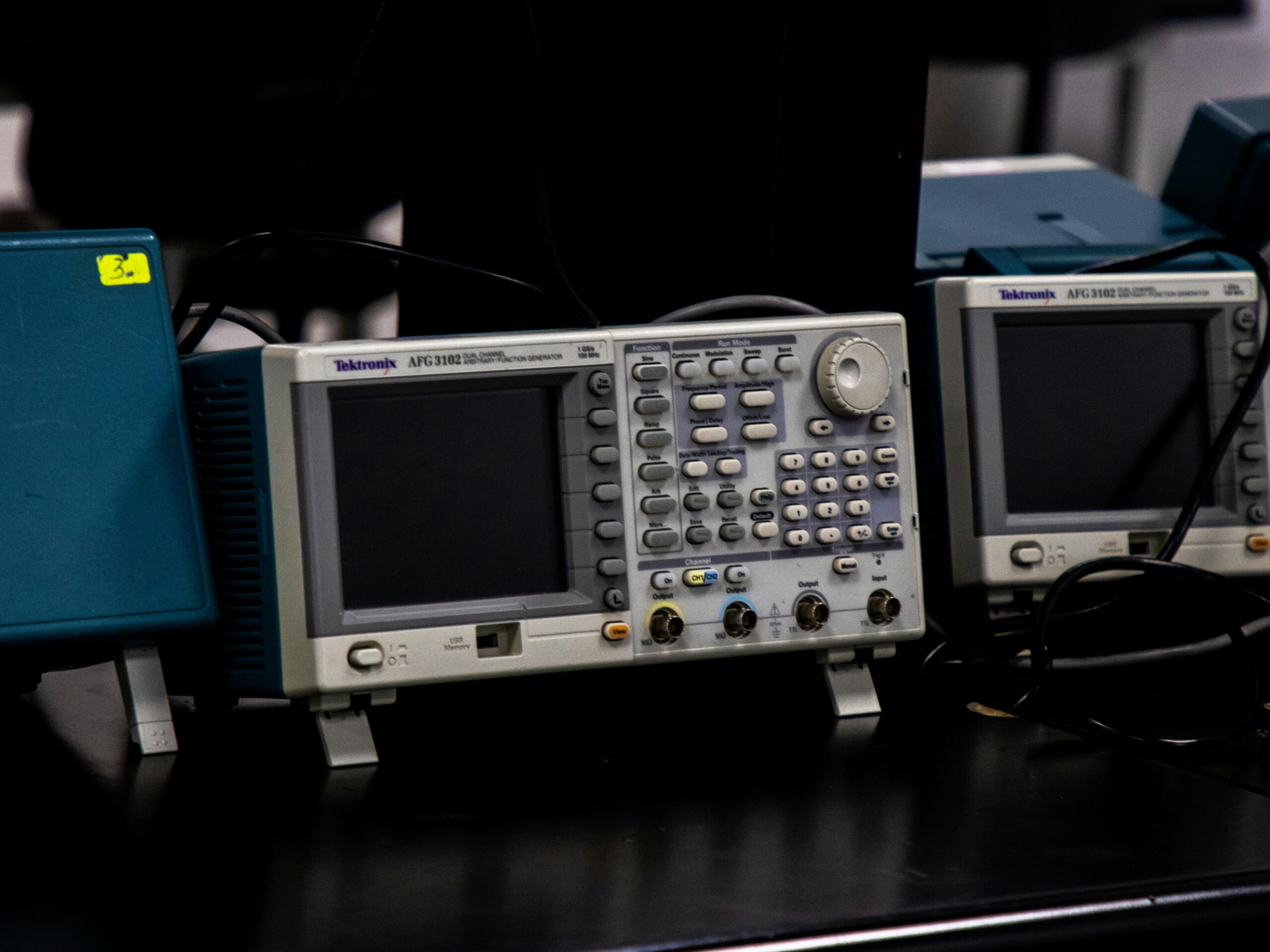
Indirect measurement transforms complex real-world problems into solvable equations by leveraging relationships, proportions, and underlying assumptions that bridge the gap between what we can measure and what we need to know.

🎯 The Foundation of Indirect Measurement in Modern Problem-Solving
Throughout history, humans have faced the challenge of measuring things that cannot be directly accessed. From ancient astronomers calculating the distance to celestial bodies to modern engineers determining structural stress in bridge components, indirect measurement has been fundamental to scientific and practical advancement. This methodology relies on establishing relationships between measurable quantities and the target values we seek to determine.
The power of indirect measurement lies not in the calculations themselves, but in the assumptions we make that allow those calculations to work. Every indirect measurement technique rests on a foundation of carefully considered premises about how different quantities relate to each other. Understanding these assumptions is the difference between accurate problem-solving and misleading conclusions.
Understanding the Core Principles Behind Indirect Calculations
Indirect measurement operates on the principle that relationships exist between different physical quantities, properties, or dimensions. When we cannot measure something directly, we identify a proxy measurement that correlates predictably with our target. This correlation must be reliable, consistent, and well-understood for the indirect method to produce valid results.
Consider the classic example of measuring a tree’s height. Rather than climbing with a measuring tape, we can use the tree’s shadow length, our own height, and our shadow length. This method assumes several critical conditions: light travels in straight lines, the ground is level, and both objects are perpendicular to the ground. Each assumption directly impacts the accuracy of our calculation.
The Mathematical Framework Supporting Indirect Measurement
Similar triangles, proportional relationships, and algebraic equations form the mathematical backbone of indirect measurement techniques. Proportional reasoning allows us to establish ratios between known and unknown quantities. When we know that two triangles are similar, we can confidently state that their corresponding sides maintain the same ratio.
This proportional thinking extends far beyond geometry. In physics, we use it to calculate force from acceleration and mass. In chemistry, stoichiometric ratios allow us to predict reaction products from reactant quantities. In economics, sampling techniques let us estimate population behaviors from limited data sets. Each application relies on assumptions about consistency, uniformity, or predictable variation.
🔍 Critical Assumptions That Shape Measurement Accuracy
Every indirect measurement technique carries hidden assumptions that practitioners must recognize and validate. These assumptions fall into several categories, each with distinct implications for measurement reliability and precision.
Geometric and Spatial Assumptions
When using indirect measurement in spatial contexts, we often assume objects are perfectly vertical, surfaces are flat, or angles are precise. Real-world conditions rarely match these idealized scenarios. A tree might lean slightly, ground might slope, or measuring instruments might have inherent inaccuracies. Recognizing these deviations helps us assess the reliability of our results and apply appropriate corrections.
The assumption of linearity proves particularly important. Many indirect measurements assume relationships are linear across the measurement range. However, real phenomena often exhibit non-linear behavior at extremes. Temperature expansion coefficients, for instance, may vary at different temperature ranges. Understanding when linearity assumptions break down prevents extrapolation errors.
Environmental and Contextual Assumptions
Environmental factors significantly influence indirect measurements. Temperature affects material dimensions, humidity impacts electrical resistance, and atmospheric pressure alters fluid behavior. Effective indirect measurement accounts for these variables or ensures they remain constant during the measurement process.
Time-based assumptions also merit careful consideration. When measuring processes that change over time, we often assume rates remain constant or follow predictable patterns. Population growth models, radioactive decay calculations, and projectile motion equations all incorporate temporal assumptions that must align with actual conditions.
Practical Applications Across Multiple Disciplines
Indirect measurement techniques permeate virtually every scientific and technical field, each adapting core principles to domain-specific challenges and constraints.
Engineering and Construction Applications 🏗️
Civil engineers routinely employ indirect measurement to assess structural integrity without destructive testing. Ultrasonic testing reveals internal flaws by measuring sound wave reflection patterns. Load testing determines weight-bearing capacity by observing deflection under known forces. These methods assume material homogeneity, consistent wave propagation speeds, and elastic behavior within testing ranges.
Surveying and land measurement rely heavily on triangulation and trigonometric calculations. Surveyors measure angles and a baseline distance to calculate distances to remote points. GPS technology extends this principle using time delays in satellite signals to calculate position, assuming constant signal propagation speed and accurate satellite positioning.
Scientific Research and Data Analysis
Researchers frequently cannot measure phenomena directly and must infer values from related observations. Astronomers calculate stellar distances using parallax, assuming Earth’s orbital diameter is known precisely and stars are effectively stationary over observation periods. Paleontologists estimate extinct animal sizes from skeletal fragments, assuming proportional relationships similar to living relatives.
Spectroscopy determines chemical composition by analyzing light absorption patterns, assuming specific elements produce characteristic spectral signatures. Carbon dating calculates artifact age from radioactive decay rates, assuming consistent historical decay constants and initial isotope ratios.
📊 Developing Robust Indirect Measurement Strategies
Creating reliable indirect measurement approaches requires systematic thinking and methodological rigor. Following structured processes helps identify necessary assumptions, validate their reasonableness, and quantify potential errors.
Step-by-Step Strategy Development
Begin by clearly defining what you need to measure and why direct measurement is impractical or impossible. Identify all quantities you can measure directly that might relate to your target. Research established relationships or theoretical models connecting these measurable quantities to your goal.
Document every assumption your method requires. For each assumption, assess its validity under your specific conditions. Can you test the assumption? Does literature support it? What happens if the assumption is partially violated? This critical examination reveals potential weaknesses before they compromise your results.
Design your measurement procedure to minimize assumption dependence or verify assumptions during execution. If you assume level ground, measure the slope. If you assume material uniformity, take multiple samples. Building verification into your methodology strengthens confidence in final results.
Error Analysis and Uncertainty Quantification
No measurement is perfect, and indirect measurements compound uncertainties from multiple sources. Systematic error analysis identifies how measurement uncertainties and assumption violations propagate through calculations to affect final results.
Sensitivity analysis reveals which variables most strongly influence outcomes. By varying inputs individually and observing output changes, you identify critical measurements requiring extra precision and assumptions needing strongest validation. This prioritization helps allocate resources effectively and understand result reliability.
🎓 Educational Approaches to Teaching Indirect Measurement
Mastering indirect measurement requires developing intuition about relationships, assumptions, and mathematical reasoning. Effective educational strategies build these skills progressively through hands-on experience and reflective practice.
Building Conceptual Understanding First
Before diving into complex calculations, students need strong conceptual foundations. Start with simple, tangible examples where indirect measurement advantages are obvious. Measuring building heights using shadows or determining pond depth using submersible weights connected to measured line lengths provide concrete contexts for abstract principles.
Explicitly discussing assumptions helps students develop critical thinking habits. Rather than presenting methods as formulas to memorize, frame them as problem-solving approaches built on logical reasoning. Ask students to identify what must be true for a method to work accurately. This metacognitive focus develops transferable analytical skills.
Progressive Complexity and Real-World Connections
Structure learning experiences to gradually increase complexity while maintaining connection to authentic applications. Begin with single-step proportional reasoning, advance to multi-step calculations, and ultimately tackle scenarios requiring students to design their own indirect measurement approaches.
Real-world problem contexts motivate learning and illustrate practical value. Challenge students to measure classroom dimensions from doorway positions, estimate crowd sizes at events, or calculate playground equipment heights using accessible tools. These authentic tasks make abstract concepts tangible and memorable.
Technology-Enhanced Indirect Measurement Techniques 📱
Modern technology dramatically expands indirect measurement capabilities while introducing new assumption categories. Digital sensors, computational modeling, and automated data analysis enable measurements previously impossible or impractical.
Digital Tools and Mobile Applications
Smartphones contain sophisticated sensors enabling indirect measurements without specialized equipment. Accelerometers measure motion and orientation, GPS receivers calculate position from satellite signals, and cameras capture images for photogrammetric analysis. Applications leverage these sensors to estimate heights, distances, angles, and areas.
These technological approaches introduce digital-specific assumptions. Sensor calibration accuracy, algorithm reliability, and computational precision all affect results. Users must understand both traditional measurement principles and technological limitations to interpret digital measurements correctly.
Computational Modeling and Simulation
Computer simulations enable indirect measurement of phenomena too dangerous, expensive, or slow to observe directly. Engineers simulate crash tests, climate scientists model long-term atmospheric changes, and economists project policy impacts through computational models. These simulations rest on assumptions about how accurately mathematical models represent complex reality.
Model validation becomes crucial when relying on simulated indirect measurements. Comparing simulation outputs to known cases, testing sensitivity to parameter variations, and examining whether results align with theoretical predictions all help establish model trustworthiness.
⚠️ Common Pitfalls and How to Avoid Them
Even experienced practitioners occasionally fall into traps that compromise indirect measurement accuracy. Recognizing common mistakes helps prevent them.
Assumption Blindness and Implicit Premises
The most dangerous assumptions are those we make unconsciously. Familiarity with methods can breed complacency where we apply techniques without questioning whether conditions support underlying assumptions. Regularly revisiting and explicitly stating assumptions maintains methodological rigor.
Cultural or disciplinary assumptions sometimes hide in plain sight. What seems obvious within one field may not hold in other contexts. Cross-disciplinary work particularly requires careful examination of implicit premises that collaborators from different backgrounds might not share.
Inappropriate Extrapolation Beyond Valid Ranges
Relationships established within specific ranges may not extend to extreme values. A proportional relationship might become non-linear, or additional factors might become significant outside tested conditions. Always verify whether your measurement conditions match those under which the indirect method was validated.
Neglecting Systematic Errors and Biases
Random errors average out over multiple measurements, but systematic errors persist. Miscalibrated instruments, consistent procedural mistakes, or biased sampling produce results that seem precise but remain inaccurate. Building redundancy and cross-validation into measurement protocols helps detect systematic problems.
🚀 Advancing Your Indirect Measurement Expertise
Developing mastery requires continuous learning, practical experience, and reflective practice. Several strategies accelerate skill development and deepen understanding.
Deliberate Practice with Diverse Problems
Expertise develops through varied experience applying principles in different contexts. Seek out problems requiring indirect measurement across domains. Each new application reinforces core concepts while revealing contextual nuances and domain-specific assumptions.
Document your problem-solving process, including dead ends and mistakes. Reflection on what worked, what didn’t, and why builds intuition faster than simply accumulating successful applications. Failed approaches often teach more than successes when examined thoughtfully.
Staying Current with Methodological Advances
Indirect measurement techniques continuously evolve as new technologies emerge and theoretical understanding deepens. Following developments in relevant fields exposes you to innovative approaches and helps you recognize when traditional methods might be outdated or improved.
Professional communities, academic journals, and technical conferences provide venues for learning about cutting-edge methods. Even fields distant from your primary focus may offer transferable insights applicable to your measurement challenges.

Synthesizing Knowledge Into Practical Wisdom
Mastering indirect measurement transcends memorizing formulas or following procedures. True expertise integrates mathematical understanding, physical intuition, critical thinking about assumptions, and practical judgment about when methods apply appropriately.
The journey toward mastery is ongoing, as each new challenge presents unique combinations of constraints, available data, and required precision. By maintaining focus on understanding underlying assumptions, validating methods against reality, and continuously questioning whether approaches match situations, you develop the flexible problem-solving capability that defines genuine expertise.
Smart calculations and precise problem-solving emerge not from following recipes, but from deeply understanding the logical foundations supporting indirect measurement techniques. When you grasp why methods work, recognize what they assume, and appreciate their limitations, you gain the power to adapt approaches creatively, design novel solutions, and confidently solve problems others might consider impossible to address.
Whether you’re a student building foundational skills, a professional applying indirect measurement in your field, or an educator helping others develop these capabilities, investing effort in understanding assumptions and relationships pays dividends throughout your problem-solving endeavors. The ability to measure indirectly what cannot be accessed directly represents a fundamental human capacity for reasoning beyond immediate perception, transforming observable realities into comprehensive understanding of the world around us.