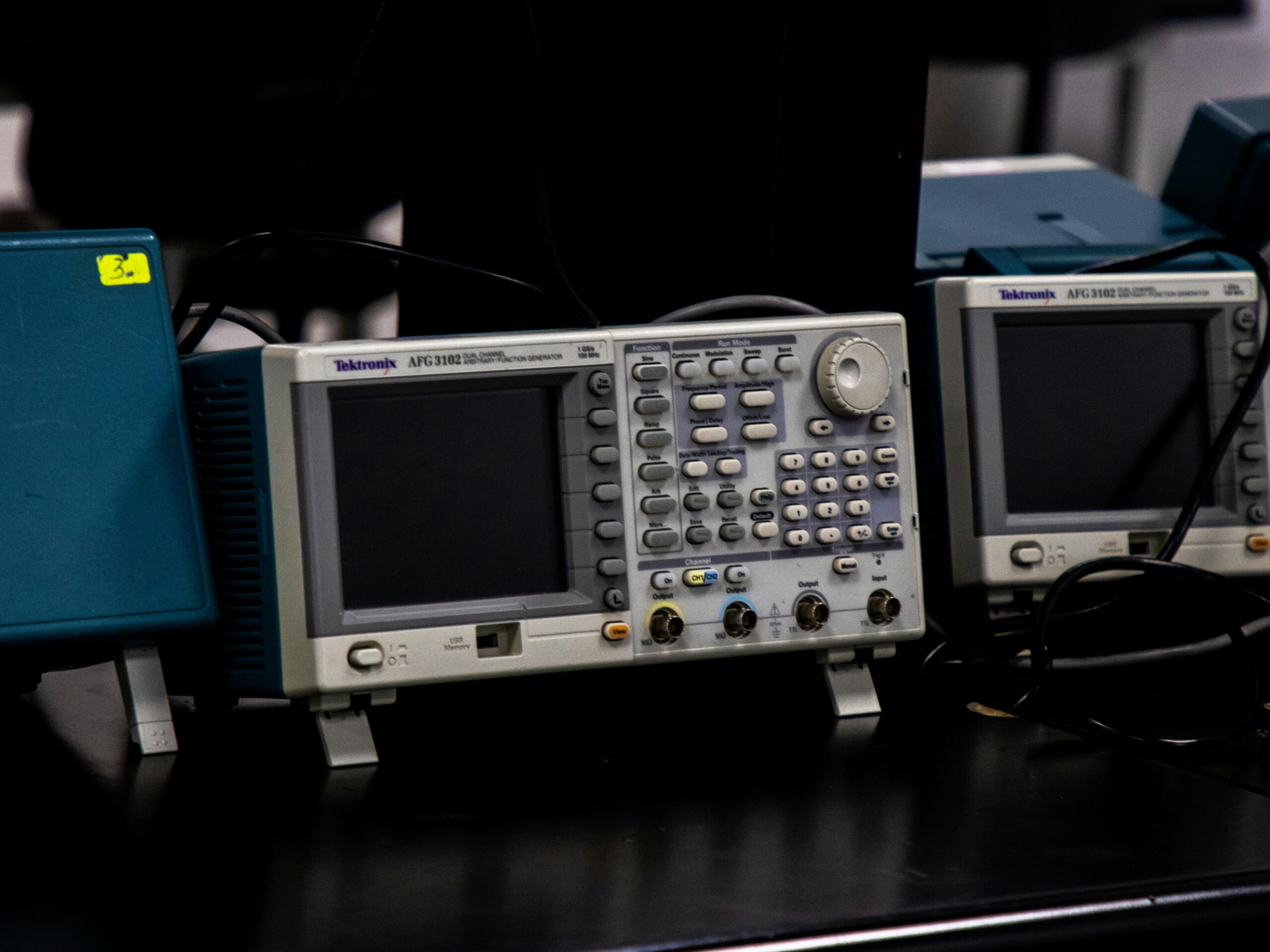
Understanding how small inaccuracies compound through calculations is essential for anyone working with data, from laboratory scientists to engineers and financial analysts.

🎯 Why Measurement Error Propagation Matters in Modern Data Analysis
Every measurement we take contains some degree of uncertainty. Whether you’re measuring temperature in a chemistry lab, distances in construction, or financial projections in business analytics, these small errors don’t simply disappear when you perform calculations. Instead, they propagate through your formulas, potentially amplifying or occasionally diminishing as they travel through complex mathematical operations.
The challenge isn’t just about knowing that errors exist—it’s about quantifying how these uncertainties affect your final results. Without proper error propagation analysis, you might report findings with unwarranted confidence or, conversely, underestimate the reliability of your data. This fundamental skill separates rigorous scientific work from guesswork.
Modern computational tools have made error propagation more accessible than ever, but understanding the underlying principles remains crucial. When you grasp how uncertainties behave through different mathematical operations, you gain the power to design better experiments, choose appropriate measurement tools, and communicate your results with appropriate confidence levels.
📊 The Fundamentals of Measurement Uncertainty
Before diving into propagation methods, we need to establish what measurement error actually means. Every measurement has an associated uncertainty that represents the range within which the true value likely falls. This isn’t about mistakes—it’s about the inherent limitations of measurement instruments and processes.
Uncertainties typically come from several sources: instrumental limitations, environmental variations, observer differences, and sample variability. A digital thermometer might have a precision of ±0.1°C, a ruler might have markings accurate to ±0.5mm, and a scale might fluctuate by ±0.01g. These aren’t flaws; they’re characteristics of the measurement system that must be acknowledged and managed.
Understanding the difference between systematic and random errors is equally important. Systematic errors consistently skew results in one direction—like a scale that’s improperly calibrated. Random errors fluctuate unpredictably around the true value and can be reduced through repeated measurements and statistical averaging.
Types of Uncertainty Representation
Uncertainties can be expressed in absolute terms (±0.5 cm) or relative terms (±2%). Absolute uncertainty maintains the same units as the measurement itself, while relative uncertainty expresses the error as a percentage or fraction of the measured value. Each format serves different purposes, and skilled analysts move fluidly between them depending on the context.
Standard deviation and standard error represent statistical measures of uncertainty derived from multiple measurements. The standard deviation describes the spread of individual measurements, while the standard error describes the uncertainty in the mean value calculated from those measurements. This distinction becomes critical when propagating errors through calculations involving averages.
🔬 Mathematical Framework for Error Propagation
The mathematical treatment of error propagation relies on calculus and statistics, but the core concepts remain accessible. When you combine measurements through mathematical operations, you need systematic methods to determine how the individual uncertainties contribute to the uncertainty in your final result.
The most commonly used approach involves partial derivatives—a calculus technique that examines how small changes in input variables affect the output. Don’t let the terminology intimidate you; the practical application follows straightforward rules for common operations.
Addition and Subtraction Rules
When adding or subtracting measurements, the absolute uncertainties combine in a specific way. If you’re calculating a result R = A + B or R = A – B, the uncertainty in R is found by taking the square root of the sum of the squared uncertainties. Mathematically: δR = √(δA² + δB²).
This quadrature method reflects an important principle: uncertainties don’t simply add linearly. If you measure a length as 10.0 ± 0.2 cm and add it to another length of 5.0 ± 0.1 cm, the total isn’t 15.0 ± 0.3 cm. Instead, it’s 15.0 ± 0.22 cm. The combined uncertainty is smaller than the sum of individual uncertainties because the chances of both measurements being at their maximum error simultaneously are relatively low.
Multiplication and Division Dynamics
For multiplication and division operations, relative uncertainties take center stage. When calculating R = A × B or R = A ÷ B, you work with fractional uncertainties. The relative uncertainty in the result equals the square root of the sum of the squared relative uncertainties: (δR/R) = √((δA/A)² + (δB/B)²).
This rule has practical implications. Suppose you’re calculating the area of a rectangle with sides measured as 10.0 ± 0.5 cm and 8.0 ± 0.4 cm. The relative uncertainties are 5% and 5% respectively. The area’s relative uncertainty would be √(0.05² + 0.05²) = 7.1%, giving an area of 80.0 ± 5.7 cm².
⚙️ Advanced Propagation Techniques for Complex Functions
Real-world calculations often involve more complex relationships than simple arithmetic. Power functions, exponentials, logarithms, and trigonometric operations each require specific treatment. Fortunately, general formulas exist that apply to any mathematical function.
The general error propagation formula uses partial derivatives for a function with multiple independent variables. For a result R that depends on variables x, y, and z, the uncertainty becomes: δR = √((∂R/∂x · δx)² + (∂R/∂y · δy)² + (∂R/∂z · δz)²). This formula looks intimidating but translates into manageable calculations for specific functions.
Power Functions and Exponentials
When dealing with power functions like R = Aⁿ, the relative uncertainty in the result equals the absolute value of the exponent times the relative uncertainty in the base: δR/R = |n| · (δA/A). If you measure a radius as 5.0 ± 0.1 cm and calculate volume using V = (4/3)πr³, the relative uncertainty in volume is three times the relative uncertainty in radius—a 2% uncertainty in radius creates a 6% uncertainty in volume.
This multiplication effect explains why measurements entering higher-power calculations demand greater precision. A small error in a variable raised to the fourth or fifth power can dramatically affect your final uncertainty.
Logarithmic and Exponential Relationships
Logarithmic functions compress uncertainty in an interesting way. For R = ln(A), the absolute uncertainty is δR = δA/A. This means the absolute uncertainty in the logarithm equals the relative uncertainty in the original measurement. This property makes logarithmic scales useful when dealing with quantities spanning many orders of magnitude.
Exponential functions do the opposite, expanding uncertainty. For R = eᴬ, the relative uncertainty becomes δR/R = δA. Small absolute uncertainties in the exponent can translate into large relative uncertainties in the result, which has profound implications for exponential growth models and compound interest calculations.
💡 Practical Strategies for Minimizing Propagated Errors
Understanding error propagation isn’t just about calculating final uncertainties—it’s about designing better measurement strategies. When you recognize which operations amplify errors most dramatically, you can structure your experiments and calculations to minimize these effects.
One powerful strategy involves identifying the dominant source of uncertainty. Often, one measurement contributes far more to the final uncertainty than others. Using the error propagation formula, you can calculate the contribution from each input variable. Focus your efforts on improving the measurement with the largest impact rather than trying to reduce all uncertainties equally.
Experimental Design Considerations
Whenever possible, structure calculations to avoid subtraction of similar quantities. When you subtract two nearly equal numbers, the relative uncertainty explodes. If you measure 100.2 ± 0.5 and subtract 99.8 ± 0.5, you get 0.4 ± 0.7—a result where the uncertainty exceeds the measured value itself. Redesigning the experiment to measure the difference directly often proves more accurate.
Choose mathematical formulations that minimize the number of operations when alternatives exist. Each calculation step provides another opportunity for error accumulation. Sometimes a more complex formula that requires fewer measured inputs produces more accurate results than a simpler formula requiring more measurements.
Leveraging Multiple Measurements
Repeated measurements provide a powerful tool for reducing random uncertainties. The standard error of the mean decreases with the square root of the number of measurements: σₘ = σ/√n. Taking four measurements cuts your uncertainty in half; sixteen measurements reduce it to one quarter. This relationship helps you decide how many replicate measurements justify the time and resources invested.
However, this benefit applies only to random errors. Systematic errors don’t decrease with repetition—you’ll just precisely measure the wrong value. Combining repeated measurements with careful calibration addresses both error types effectively.
🖥️ Computational Tools and Software Solutions
While hand calculations work for simple scenarios, modern data analysis often involves complex functions with many variables. Specialized software and programming libraries automate error propagation calculations, reducing the risk of mathematical mistakes and handling intricate relationships effortlessly.
Python libraries like uncertainties automatically track and propagate errors through calculations. You define variables with their uncertainties, then write calculations using normal mathematical operations—the library handles all the error propagation mathematics behind the scenes. Similar capabilities exist in MATLAB, R, and other scientific computing environments.
Spreadsheet programs can implement error propagation formulas, though this requires more manual setup. Creating templates with built-in error propagation formulas for common calculations saves time and ensures consistency across analyses. Many scientific calculators also include basic error propagation functions for field work.
Monte Carlo Simulation Methods
For extremely complex relationships where analytical solutions become impractical, Monte Carlo simulation offers an alternative approach. This technique generates thousands or millions of random input values within the specified uncertainty ranges, calculates results for each combination, then analyzes the distribution of outputs statistically.
Monte Carlo methods handle correlated uncertainties and non-linear relationships that challenge traditional propagation formulas. They also provide complete probability distributions rather than single uncertainty values, revealing whether results follow normal distributions or exhibit skewness. The computational intensity that once limited this approach has become negligible with modern processors.
📈 Real-World Applications Across Disciplines
Error propagation principles apply universally, but the specific challenges vary by field. Understanding domain-specific applications helps you recognize when and how to apply these techniques in your own work.
In analytical chemistry, error propagation determines whether measured concentrations genuinely differ or fall within overlapping uncertainty ranges. When preparing dilutions or calculating final concentrations from multiple measurement steps, propagated errors guide decisions about whether additional precision is needed at specific stages.
Engineering and Manufacturing Contexts
Mechanical engineers use error propagation to establish manufacturing tolerances. If a component’s performance depends on multiple dimensions, error analysis determines how tight each individual tolerance must be to ensure the final assembly functions correctly. This analysis balances cost against quality—tighter tolerances increase manufacturing expenses, so optimizing which dimensions require greater precision saves money without compromising performance.
Electrical engineers apply similar principles when analyzing circuits. Resistors, capacitors, and other components have rated tolerances. Propagating these through circuit equations determines the expected variation in output voltages, currents, or frequencies, ensuring designs work reliably despite component variations.
Financial and Economic Analysis
Financial projections involve cascading uncertainties through time. Interest rates, growth projections, and initial values all carry uncertainties that propagate through compound interest and investment return calculations. Understanding error propagation helps analysts establish realistic confidence intervals for long-term projections rather than presenting false precision.
Economic models incorporating multiple uncertain parameters benefit from sensitivity analysis built on error propagation principles. Identifying which variables most strongly influence outcomes guides data collection efforts and helps decision-makers understand where reducing uncertainty provides the greatest value.
🎓 Building Confidence Through Proper Uncertainty Communication
Calculating propagated errors is only half the challenge—communicating uncertainties effectively to stakeholders completes the process. How you present uncertainty information dramatically affects whether audiences understand and trust your results.
Always report uncertainties alongside measurements. Writing “the temperature is 25°C” without uncertainty information renders the measurement scientifically incomplete. Writing “25.0 ± 0.5°C” provides context about reliability. The number of significant figures should reflect the precision implied by your uncertainty—avoid reporting eight decimal places when your uncertainty affects the first decimal place.
Visual Representation of Uncertainty
Graphs with error bars visually communicate measurement uncertainty more effectively than tables of numbers. Error bars show at a glance whether data points overlap (suggesting no significant difference) or clearly separate (indicating genuine differences beyond measurement noise). Choose error bar styles appropriate for your data—standard deviation, standard error, or confidence intervals convey different information.
When presenting multiple sources of uncertainty, consider showing them separately. A graph might display both systematic and random errors, or distinguish between instrumental precision and sample variability. This transparency helps audiences understand the nature of limitations and what improvements might be possible.
🚀 Advancing Your Error Analysis Skills
Mastering error propagation requires practice with progressively complex scenarios. Start with simple arithmetic combinations of two measured quantities, then advance to functions involving multiple variables and operations. Working through diverse examples across different contexts builds intuition about how uncertainties behave.
Validate your propagated uncertainty calculations through repeated experiments when possible. If your error analysis predicts a certain range of outcomes, and actual repeated measurements consistently fall outside that range, revisit your uncertainty estimates and propagation calculations. This empirical feedback refines your understanding.
Stay current with discipline-specific guidelines for uncertainty analysis. Organizations like NIST, ISO, and professional societies publish detailed recommendations for measurement uncertainty in various fields. These resources address nuances and special cases beyond general propagation principles.
🔍 Common Pitfalls and How to Avoid Them
Even experienced analysts occasionally make error propagation mistakes. Awareness of common pitfalls helps you avoid them and catch errors before they affect important decisions.
Assuming independence when variables are correlated leads to incorrect uncertainty estimates. If two measurements depend on the same instrument calibration or environmental condition, their errors aren’t independent. Correlated uncertainties require modified propagation formulas that account for covariance—neglecting this correlation typically underestimates final uncertainty.
Confusing precision with accuracy causes another frequent problem. You might calculate uncertainty to five decimal places, but if systematic errors exceed your random uncertainty by orders of magnitude, that precision is meaningless. Always consider both random and systematic error sources and address the dominant contributor first.
Rounding intermediate calculations prematurely can accumulate rounding errors that exceed your measurement uncertainties. Maintain extra digits through calculation chains, rounding only the final reported result to reflect its true precision. Modern computational tools make this easy—there’s no reason to round intermediate steps.

✨ Transforming Data Analysis Through Error Awareness
When you consistently apply error propagation principles, your entire approach to data analysis transforms. You develop intuition about which measurements matter most, where to invest in better instrumentation, and how confidently you can draw conclusions from data.
This skillset also enhances critical evaluation of others’ work. When reading research papers or technical reports, you can assess whether reported uncertainties seem reasonable and whether conclusions are justified given the measurement limitations. This critical lens makes you both a better analyst and a more discerning consumer of scientific information.
Perhaps most importantly, proper uncertainty quantification builds appropriate confidence—neither overconfident claims nor excessive caution. You can distinguish between genuinely significant findings and noise, make data-driven decisions with clear understanding of associated risks, and communicate results with the credibility that comes from rigorous, transparent analysis. This combination of technical competence and intellectual honesty represents the hallmark of professional data analysis across all fields.