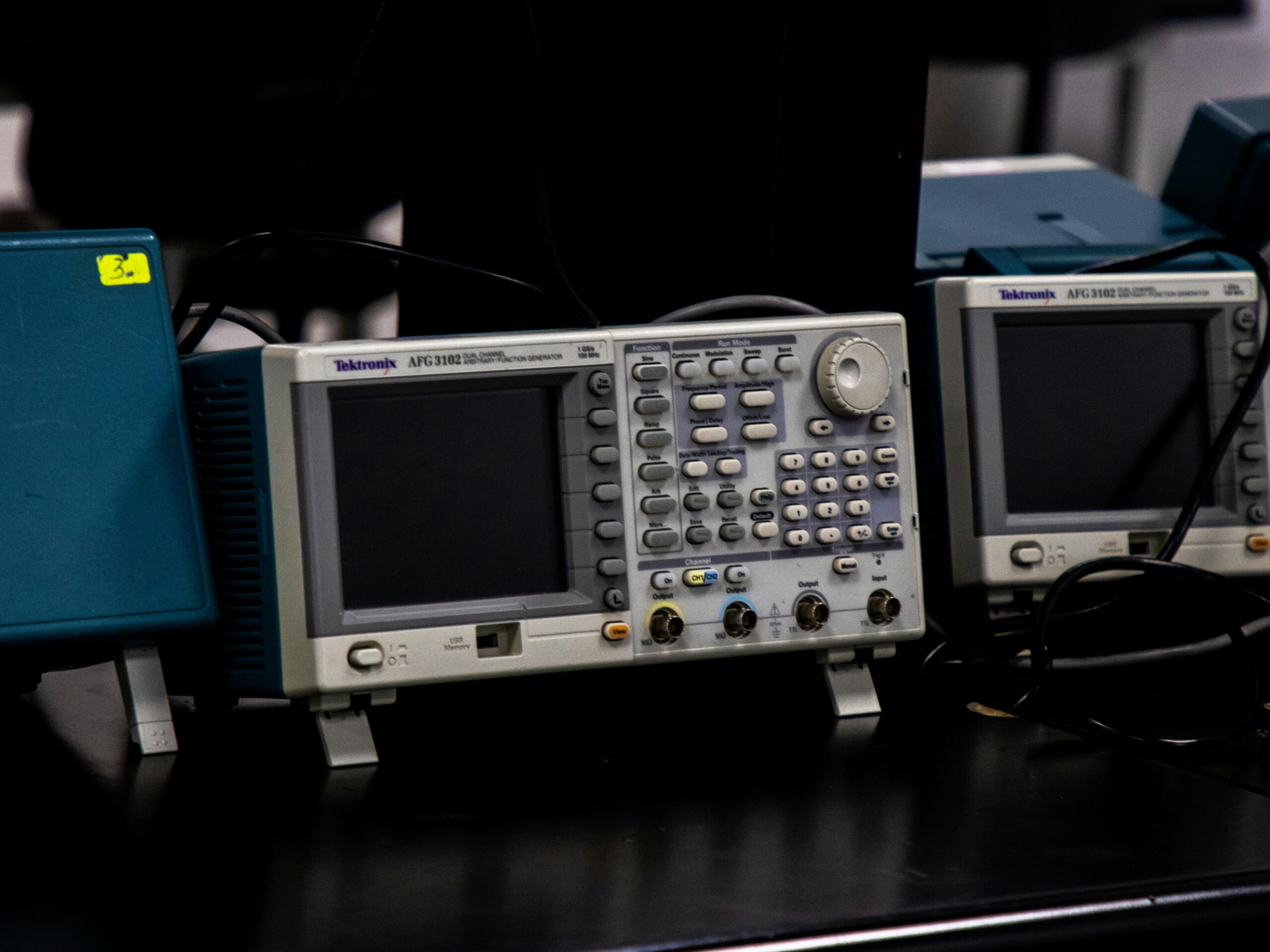
Experimental design failures cost researchers time, resources, and credibility. Understanding where things go wrong transforms how we approach scientific inquiry and real-world testing.

🔬 The Silent Crisis in Modern Research
Every year, millions of dollars vanish into experiments that were doomed from their inception. Not because the hypotheses were wrong or the researchers incompetent, but because subtle misalignments in experimental design created invisible tripwires that guaranteed failure. These aren’t dramatic explosions or obvious catastrophes—they’re quiet erosions of validity that corrupt data, mislead conclusions, and waste precious resources.
The challenge isn’t simply avoiding mistakes. It’s recognizing that experimental design exists as a complex ecosystem where each decision cascades through the entire research process. A seemingly innocuous choice about sample selection can undermine months of careful work. An overlooked confounding variable can transform robust findings into statistical mirages.
What makes misaligned experimental design particularly insidious is its ability to hide in plain sight. The experiment runs smoothly, data gets collected, analyses proceed according to plan, and results emerge that look perfectly legitimate. Only later—sometimes years later—does someone notice the fundamental flaw that invalidates everything.
📊 Understanding the Anatomy of Experimental Misalignment
Experimental misalignment occurs when there’s a disconnect between what you’re trying to measure and how you’re attempting to measure it. This gap can manifest in countless ways, but certain patterns emerge repeatedly across disciplines and research contexts.
The Question-Method Mismatch
Perhaps the most fundamental form of misalignment happens when researchers ask one question but design an experiment that answers something entirely different. A pharmaceutical company might want to know whether their drug improves quality of life, but their experimental design only measures symptom reduction. These aren’t the same thing, yet the confusion between them drives flawed conclusions.
This mismatch often stems from defaulting to convenient measurement tools rather than ones that genuinely capture the phenomenon of interest. Researchers measure what’s easy to quantify rather than what actually matters, creating a situation where statistical significance masks conceptual irrelevance.
Sampling Biases That Corrupt Everything
Your sample is the lens through which you view reality. When that lens is warped, everything you see becomes distorted. Sampling misalignment takes many forms: convenience samples presented as representative populations, self-selected participants in studies requiring random assignment, or datasets that systematically exclude crucial demographic segments.
The danger multiplies when researchers remain unaware of their sampling limitations. An experiment conducted entirely on university students gets generalized to all humans. A clinical trial with participants from a single geographic region claims universal applicability. Each represents a misalignment between the population of interest and the population actually studied.
⚠️ The Hidden Variables Lurking in Your Data
Confounding variables are the shapeshifters of experimental design—they masquerade as the effects you’re looking for while actually driving the patterns you observe. Their presence creates misalignment between apparent causation and actual mechanisms.
Consider a study finding that coffee consumption correlates with heart disease. Without proper controls, this could lead to warnings about coffee. But what if coffee drinkers also tend to smoke more, sleep less, and exercise less? The coffee might be innocent while lifestyle factors drive the correlation. This is confounding in action—a misalignment between the variable you think matters and the ones actually influencing outcomes.
Temporal Misalignment and the Timing Trap
When you measure matters just as much as what you measure. Temporal misalignment occurs when there’s a disconnect between when effects occur and when researchers look for them. A drug might show no immediate benefits but significant long-term advantages. An educational intervention might demonstrate delayed effects that don’t appear in short-term assessments.
This timing challenge extends to seasonal effects, developmental windows, and cyclical patterns. An experiment measuring mood only during winter might miss crucial variation. A study of child development that doesn’t account for age-appropriate milestones misses the entire picture.
🎯 Statistical Power and the Significance Illusion
Statistical significance has become both the gold standard and the Achilles heel of experimental research. The misalignment here isn’t in the mathematics—it’s in the interpretation and the experimental designs built around arbitrary significance thresholds.
Underpowered studies represent a particularly pernicious form of misalignment. Researchers design experiments without sufficient sample sizes to detect the effects they’re looking for. When they inevitably find nothing, they conclude the effect doesn’t exist rather than acknowledging their experiment couldn’t have found it even if it were real.
Conversely, overpowered studies with massive sample sizes detect tiny, practically meaningless effects that achieve statistical significance but lack real-world importance. The misalignment here is between statistical detectability and practical relevance.
The Multiple Comparisons Minefield
Run enough statistical tests and you’ll find significant results purely by chance. This multiple comparisons problem creates misalignment between apparent discoveries and actual effects. Researchers measuring dozens of variables and looking for any significant relationships are essentially guaranteed to find some—but these findings are often statistical noise rather than genuine signals.
The solution isn’t avoiding multiple comparisons entirely but acknowledging them explicitly and adjusting interpretations accordingly. Pre-registration of hypotheses, correction factors, and replication studies all help realign statistical inference with reality.
🔄 The Replication Crisis and Design Flaws
The ongoing replication crisis across multiple scientific disciplines reveals just how widespread experimental misalignment has become. When prestigious studies fail to replicate, the culprit is often subtle design flaws that seemed innocuous in the original research but proved fatal to generalizability.
These replication failures highlight several systematic misalignments: flexibility in data analysis that allows researchers to torture data until it confesses, publication bias that favors novel positive findings over null results, and insufficient attention to contextual factors that might limit generalizability.
Context Collapse and External Validity
Laboratory experiments offer control but sacrifice ecological validity. Field experiments offer realism but sacrifice control. This tension creates fundamental misalignment between internal validity (did the manipulation cause the effect?) and external validity (does this matter in the real world?).
Researchers often design experiments that optimize for one type of validity while inadvertently destroying the other. A psychology experiment with perfect internal validity conducted in an artificial laboratory setting might tell us nothing about how people behave in natural contexts. Meanwhile, a messy field study might observe real-world effects without being able to identify their causes.
💡 Recognizing Misalignment Before It’s Too Late
Prevention beats correction when it comes to experimental design. Developing sensitivity to potential misalignments during the planning phase saves exponentially more effort than discovering them after data collection.
The Pre-Registration Advantage
Pre-registering experimental designs—publicly committing to specific hypotheses, methods, and analyses before data collection—creates accountability that prevents many forms of misalignment. It eliminates the flexibility that allows researchers to unconsciously align their analyses with desired outcomes rather than genuine findings.
This practice forces explicit articulation of how methods connect to research questions, making misalignments visible before they corrupt results. When you must publicly specify your dependent variables, sample size calculations, and analytical approach, the gaps between question and method become obvious.
Pilot Testing as Alignment Detection
Small-scale pilot studies serve as experimental wind tunnels, revealing design flaws before full resource commitment. They expose practical problems, measurement issues, and unexpected confounds that theory alone couldn’t predict.
Effective pilot testing specifically looks for misalignments: Do participants interpret instructions as intended? Do measures capture the intended constructs? Are there unexpected sources of variation? This diagnostic approach transforms pilots from mere feasibility checks into alignment calibration tools.
🛠️ Corrective Strategies for Common Misalignments
Even well-designed experiments can drift toward misalignment during execution. Developing correction strategies helps maintain alignment throughout the research process.
Manipulation Checks and Construct Validity
Manipulation checks verify that your experimental manipulations actually changed what you intended to change. If you’re trying to induce stress but your manipulation check shows no difference in cortisol levels, your independent variable isn’t actually independent—it’s nonexistent.
These checks create feedback loops that reveal misalignment between theoretical constructs and operational definitions. They answer the crucial question: “Did we actually manipulate what we think we manipulated?”
Attention Checks and Data Quality
Participant inattention creates misalignment between recorded responses and genuine reactions. Attention checks identify participants who aren’t actually engaging with your experimental materials, allowing you to separate signal from noise.
These quality controls become especially crucial in online research where participant environments remain uncontrolled. A few strategically placed attention checks dramatically improve data quality by identifying responses that reflect random clicking rather than thoughtful engagement.
📈 Advanced Design Strategies for Alignment
Beyond avoiding pitfalls, sophisticated experimental design actively creates alignment between research questions and methodological approaches.
Within-Subjects Versus Between-Subjects Trade-Offs
Choosing between within-subjects designs (same participants in all conditions) and between-subjects designs (different participants in each condition) represents a fundamental alignment decision. Within-subjects designs offer statistical power and control for individual differences but introduce order effects and demand characteristics. Between-subjects designs avoid these problems but require larger samples and leave individual variation uncontrolled.
The alignment question is: which threats matter more for your specific research question? There’s no universally correct answer—only answers appropriate to particular contexts.
Mixed-Methods Triangulation
Combining quantitative and qualitative approaches creates redundancy that helps identify misalignments. When multiple methods converge on similar conclusions, confidence increases. When they diverge, the discrepancy highlights potential misalignments in one or both approaches.
This triangulation strategy recognizes that every method has blind spots. Using multiple methods with different blind spots reveals what any single approach would miss.
🌐 Ethical Dimensions of Experimental Misalignment
Misaligned experimental designs aren’t just methodological problems—they’re ethical issues. When flawed designs produce misleading conclusions that influence policy, clinical practice, or public understanding, the consequences extend far beyond academic journals.
Researchers have ethical obligations to design experiments that can actually answer their research questions. Publishing results from fundamentally misaligned designs wastes other researchers’ time, misleads practitioners, and potentially harms people who make decisions based on flawed evidence.
The Responsibility to Acknowledge Limitations
Perfect alignment is impossible. Every experiment involves trade-offs and limitations. The ethical requirement isn’t perfection but transparency—explicitly acknowledging where misalignments exist and how they might affect interpretations.
This transparency allows readers to evaluate evidence appropriately rather than treating all published findings as equally trustworthy. It transforms limitations from embarrassments to be hidden into honest acknowledgments that advance collective understanding.
🎓 Building Alignment Awareness in Research Culture
Addressing experimental misalignment requires more than individual vigilance—it demands cultural shifts in how research communities approach experimental design.
Training programs should emphasize design thinking over procedural templates. Rather than teaching researchers to follow standard protocols, education should develop sensitivity to alignment questions: What am I really trying to learn? Does this method actually address that question? What assumptions am I making, and how might they be wrong?
Peer review processes should prioritize design evaluation over outcome evaluation. Reviewers should assess whether methods align with questions regardless of whether results are “interesting” or statistically significant. This shift would reduce publication bias while improving overall design quality.

🚀 Moving Forward with Better Experimental Practices
The future of experimental research depends on developing collective immunity to misalignment. This doesn’t mean eliminating all mistakes—that’s impossible. It means creating systems that make misalignment visible, correctable, and less likely to propagate through the scientific literature.
Open science practices including data sharing, pre-registration, and replication studies all contribute to this goal. They create transparency that exposes misalignments others might have missed and facilitates correction when problems emerge.
Ultimately, addressing experimental misalignment requires embracing humility about the difficulty of truly understanding causal relationships. Every experiment is an approximation, every measurement imperfect, every inference provisional. Recognizing these limitations doesn’t weaken research—it strengthens it by aligning claims with actual evidence rather than inflating findings beyond what methods can support.
The path forward involves continuous learning, systematic self-correction, and communities committed to getting things right rather than just getting published. When experiments go astray, the question isn’t whether we can avoid all mistakes but whether we can learn from them quickly enough to prevent their repetition. Building research cultures that prioritize alignment over convenience, validity over novelty, and transparency over impression management creates foundations for genuine cumulative knowledge rather than endless cycles of discovery and retraction.