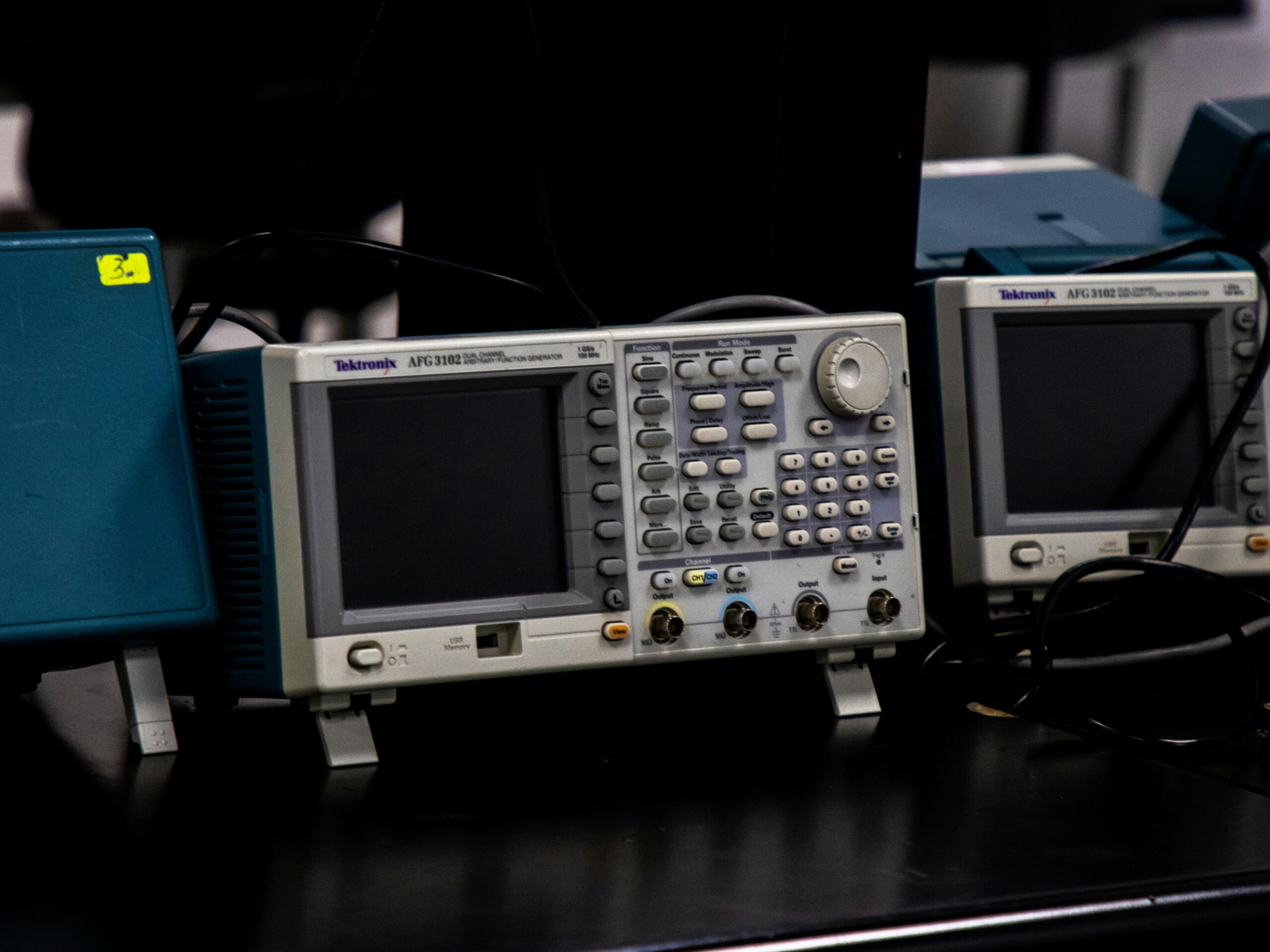
The modern computing landscape faces a critical challenge: ensuring software and hardware work together harmoniously to deliver optimal performance and user experience.

🔧 Understanding the Software-Hardware Divide
The relationship between software and hardware has always been complex, but today’s technological ecosystem has amplified this complexity exponentially. As processors become more powerful, memory capacities increase, and software applications grow more sophisticated, the gap between what hardware can theoretically deliver and what software actually achieves continues to widen.
This mismatch manifests in various ways across different computing environments. Desktop computers may struggle with poorly optimized applications despite having cutting-edge components. Mobile devices experience battery drain from inefficient code execution. Gaming systems fail to utilize their full graphical potential due to inadequate driver support or poorly coded engines.
The consequences of this disconnect extend beyond mere performance issues. Users experience frustration when expensive hardware fails to meet expectations. Developers face mounting pressure to optimize code for an ever-expanding array of hardware configurations. Manufacturers struggle to differentiate their products when software can’t leverage unique hardware features effectively.
🎯 The Root Causes Behind Performance Gaps
Several fundamental factors contribute to the persistent challenge of software-hardware misalignment. Understanding these root causes is essential for developing effective solutions that bridge this technological divide.
Architectural Complexity and Abstraction Layers
Modern computing systems rely on multiple abstraction layers between software applications and physical hardware components. While these layers provide flexibility and compatibility, they also introduce overhead and potential bottlenecks. Each layer adds latency and reduces the software’s ability to directly leverage hardware capabilities.
Operating systems, virtual machines, runtime environments, and API frameworks all serve important purposes, but they create distance between application code and silicon. This separation means developers often write code without deep knowledge of the underlying hardware architecture, leading to suboptimal utilization of available resources.
Fragmentation Across Hardware Ecosystems
The diversity of hardware configurations presents another significant challenge. Unlike the relatively standardized computing environment of decades past, today’s market features countless processor architectures, graphics cards, memory configurations, and storage solutions. Mobile devices alone span thousands of unique hardware combinations.
Developers face an impossible task: optimizing software for every possible hardware configuration. The result is often a compromise—code that runs adequately on most systems but excels on none. This middle-ground approach leaves performance potential untapped across the entire hardware spectrum.
Development Priorities and Time Constraints
Business pressures and market dynamics frequently prioritize rapid development and feature delivery over deep hardware optimization. Companies rush to release products quickly, leaving insufficient time for thorough performance tuning and hardware-specific optimizations.
This reality reflects economic constraints rather than technical limitations. Spending months optimizing software for marginal performance gains often doesn’t justify the investment when new features drive sales and user engagement. However, this short-term thinking perpetuates the performance gap.
💡 Innovative Approaches to Bridge the Divide
Despite these challenges, the technology industry has developed numerous strategies and tools to minimize software-hardware mismatch and maximize performance. These approaches range from low-level technical solutions to high-level architectural patterns.
Hardware-Aware Programming Paradigms
Modern development frameworks increasingly provide tools that help developers write hardware-conscious code without requiring deep expertise in computer architecture. These frameworks abstract complexity while still enabling efficient hardware utilization.
Compute APIs like Vulkan, Metal, and DirectX 12 give developers more direct control over graphics hardware, reducing overhead and enabling better performance. Similarly, frameworks for parallel computing such as CUDA and OpenCL allow applications to leverage GPU computational power for general-purpose tasks beyond graphics rendering.
Machine learning frameworks have pioneered hardware-aware optimization techniques that automatically adjust computational strategies based on available hardware resources. TensorFlow, PyTorch, and similar platforms can detect available GPUs, TPUs, or specialized accelerators and adapt execution accordingly, maximizing performance without manual intervention.
Adaptive Performance Optimization
Dynamic optimization represents a powerful strategy for bridging the software-hardware gap. Rather than relying solely on static compilation and fixed execution paths, adaptive systems adjust their behavior in real-time based on runtime conditions and hardware capabilities.
Just-in-time compilation technologies analyze code execution patterns and hardware characteristics to generate optimized machine code tailored to specific processors. This approach combines the portability of interpreted languages with the performance of native compilation, adapting to different hardware configurations automatically.
Profiling-guided optimization uses data collected during actual program execution to inform compiler decisions, generating code that performs better on specific hardware configurations. This feedback loop continuously improves performance as software accumulates usage data across diverse systems.
Unified Memory Architectures
The traditional separation between CPU and GPU memory creates significant performance bottlenecks, requiring expensive data transfers that waste time and energy. Unified memory architectures address this issue by allowing processors and graphics units to share a common memory space.
Apple’s unified memory approach in its M-series chips exemplifies this strategy’s potential. By eliminating separate memory pools and the associated transfer overhead, these systems achieve better performance and energy efficiency. Software developers can write code that freely shares data between CPU and GPU without explicit memory management.
This architectural innovation requires corresponding software changes to fully realize its benefits. Developers must rethink data structures and algorithms to leverage shared memory effectively, but the performance gains justify the effort.
🚀 Platform-Specific Optimization Strategies
Different computing platforms present unique challenges and opportunities for addressing software-hardware mismatch. Tailored approaches for each platform maximize performance while respecting platform-specific constraints and conventions.
Mobile Device Optimization
Mobile platforms face particularly acute software-hardware challenges due to their constrained power budgets and thermal limitations. Battery life concerns mean that raw performance must be balanced against energy efficiency, creating complex optimization tradeoffs.
Modern mobile operating systems implement sophisticated power management features that dynamically adjust processor frequencies, activate or deactivate cores, and throttle background processes. Software developers must work within these frameworks, designing applications that deliver smooth performance while respecting power constraints.
Profiling tools specifically designed for mobile development help identify performance bottlenecks and energy inefficiencies. Android Studio’s profiler and Xcode Instruments provide detailed insights into CPU usage, memory allocation, network activity, and battery consumption, enabling developers to optimize effectively for mobile hardware.
Cloud and Distributed Computing
Cloud environments introduce additional complexity layers, as applications must perform efficiently across virtualized resources with varying characteristics. The hardware abstraction inherent in cloud computing can exacerbate software-hardware mismatch issues.
Container technologies like Docker and orchestration platforms like Kubernetes help manage this complexity by standardizing deployment environments and resource allocation. Applications can specify resource requirements, and the platform handles optimal placement across available hardware.
Serverless computing takes this abstraction further, completely removing infrastructure management from developers’ concerns. While this simplifies deployment, it also reduces control over performance optimization. Careful function design and monitoring become critical for achieving acceptable performance in serverless architectures.
Gaming and Real-Time Graphics
Gaming represents one of the most demanding applications in terms of software-hardware coordination. Modern games must deliver consistent frame rates while rendering complex scenes, processing physics simulations, managing AI behaviors, and responding to player inputs—all simultaneously.
Game engines like Unreal and Unity provide extensive tools for hardware optimization, including level-of-detail systems, occlusion culling, shader optimization, and multi-threaded rendering. These features help developers squeeze maximum performance from available hardware while maintaining visual quality.
Graphics API evolution has focused intensely on reducing CPU overhead and enabling better GPU utilization. Modern APIs minimize driver intervention and allow more direct hardware control, giving game developers the tools to eliminate performance bottlenecks that previously limited frame rates.
🔬 Emerging Technologies and Future Directions
The ongoing evolution of both hardware and software promises new approaches to bridging the performance gap. Several emerging technologies show particular promise for creating more harmonious software-hardware relationships.
Artificial Intelligence for Optimization
Machine learning itself has become a tool for solving software-hardware mismatch problems. AI-powered compilers can analyze code and automatically apply optimizations that human developers might miss. These systems learn from vast datasets of code patterns and performance characteristics across different hardware configurations.
Runtime optimization powered by machine learning can predict performance bottlenecks before they occur and preemptively adjust resource allocation. This proactive approach prevents performance degradation rather than merely reacting to problems after they manifest.
Neural architecture search and automated hyperparameter tuning help optimize machine learning models specifically for target hardware, ensuring efficient inference even on resource-constrained devices. This becomes increasingly important as AI features proliferate across all types of software applications.
Heterogeneous Computing and Specialized Accelerators
The trend toward specialized hardware accelerators for specific computational tasks continues to accelerate. Neural processing units, video encoding chips, cryptographic accelerators, and domain-specific processors offload specialized work from general-purpose CPUs.
Software must evolve to leverage these heterogeneous computing environments effectively. Frameworks that automatically distribute work across available accelerators will become essential for achieving optimal performance. Developers need tools that abstract the complexity of managing multiple processing units with different capabilities.
The challenge lies in creating programming models that remain accessible to developers without specialized hardware knowledge while still enabling efficient utilization of diverse processors. Success requires collaboration between hardware manufacturers, operating system vendors, and development tool creators.
Quantum-Classical Hybrid Systems
As quantum computing transitions from research labs toward practical applications, new challenges emerge in coordinating quantum processors with classical hardware. Quantum-classical hybrid algorithms require seamless handoffs between quantum and conventional computing resources.
Software frameworks for quantum computing must bridge an even larger conceptual gap than traditional programming models. They must translate high-level algorithms into quantum gate sequences while managing the interface with classical control systems and post-processing hardware.
Though widespread quantum computing remains years away, early work on these programming models informs broader lessons about software-hardware coordination in heterogeneous environments.
📊 Measuring and Monitoring Performance
Effectively addressing software-hardware mismatch requires robust measurement and monitoring systems. Organizations cannot optimize what they cannot measure, making performance visibility essential.
Modern application performance monitoring solutions provide comprehensive insights into how software utilizes underlying hardware resources. These tools track CPU utilization, memory consumption, disk I/O patterns, network bandwidth, and GPU activity, correlating these metrics with user experience indicators like response times and error rates.
Continuous profiling in production environments represents an important evolution beyond traditional development-time profiling. By gathering performance data from real users across diverse hardware configurations, developers gain insights into actual performance characteristics rather than idealized benchmark scenarios.
Telemetry systems collect hardware configuration information alongside performance metrics, enabling analysis of how different components affect application performance. This data-driven approach identifies optimization opportunities that deliver the greatest impact across the user base.
🎓 Best Practices for Development Teams
Organizations can adopt specific practices to minimize software-hardware mismatch and deliver better performance across diverse hardware configurations.
- Hardware-diverse testing environments: Test software across a representative range of hardware configurations, not just high-end development machines. Include older systems, budget devices, and varied graphics cards in testing protocols.
- Performance budgets: Establish clear performance targets for key metrics like startup time, response latency, and resource consumption. Treat performance as a feature with specific requirements rather than an afterthought.
- Regular profiling and optimization cycles: Schedule dedicated time for performance analysis and optimization rather than relegating it to pre-release crunch periods. Small, continuous improvements prevent technical debt accumulation.
- Collaboration with hardware vendors: Engage with processor manufacturers, graphics card makers, and device vendors to understand hardware capabilities and optimization opportunities. Many vendors provide developer resources and optimization guides.
- User-focused metrics: Measure performance from the user’s perspective, not just technical benchmarks. Frame rates, loading times, and responsiveness matter more than theoretical throughput numbers.
- Modular architecture: Design software with modular components that can be optimized independently. This approach enables targeted performance improvements without system-wide rewrites.

🌟 Creating Lasting Hardware-Software Harmony
Bridging the gap between software and hardware represents an ongoing journey rather than a destination. As hardware capabilities evolve and software complexity increases, new challenges continuously emerge requiring innovative solutions.
Success requires coordinated efforts across the entire technology stack. Hardware designers must consider software needs when architecting new processors and systems. Operating system developers need to provide efficient abstractions that balance simplicity with performance. Application developers must understand enough about underlying hardware to make informed optimization decisions.
The most effective approach combines multiple strategies: hardware-aware programming models, dynamic optimization techniques, comprehensive performance monitoring, and development practices that prioritize efficiency. Organizations that treat software-hardware harmony as a core competency rather than an optional enhancement will deliver superior products that fully leverage available computational resources.
Users increasingly demand applications that perform flawlessly regardless of their hardware configuration. Meeting this expectation requires dedication to bridging the software-hardware divide through continuous learning, measurement, and optimization. The technologies and practices outlined here provide a roadmap for achieving this goal.
As computing continues its relentless evolution, the fundamental importance of software-hardware coordination only grows stronger. Tomorrow’s breakthrough applications will succeed not just through clever algorithms or powerful processors, but through the seamless integration of both—software and hardware working in perfect harmony to deliver experiences that feel effortless to users while maximizing the potential of every transistor, core, and memory cell in their devices.