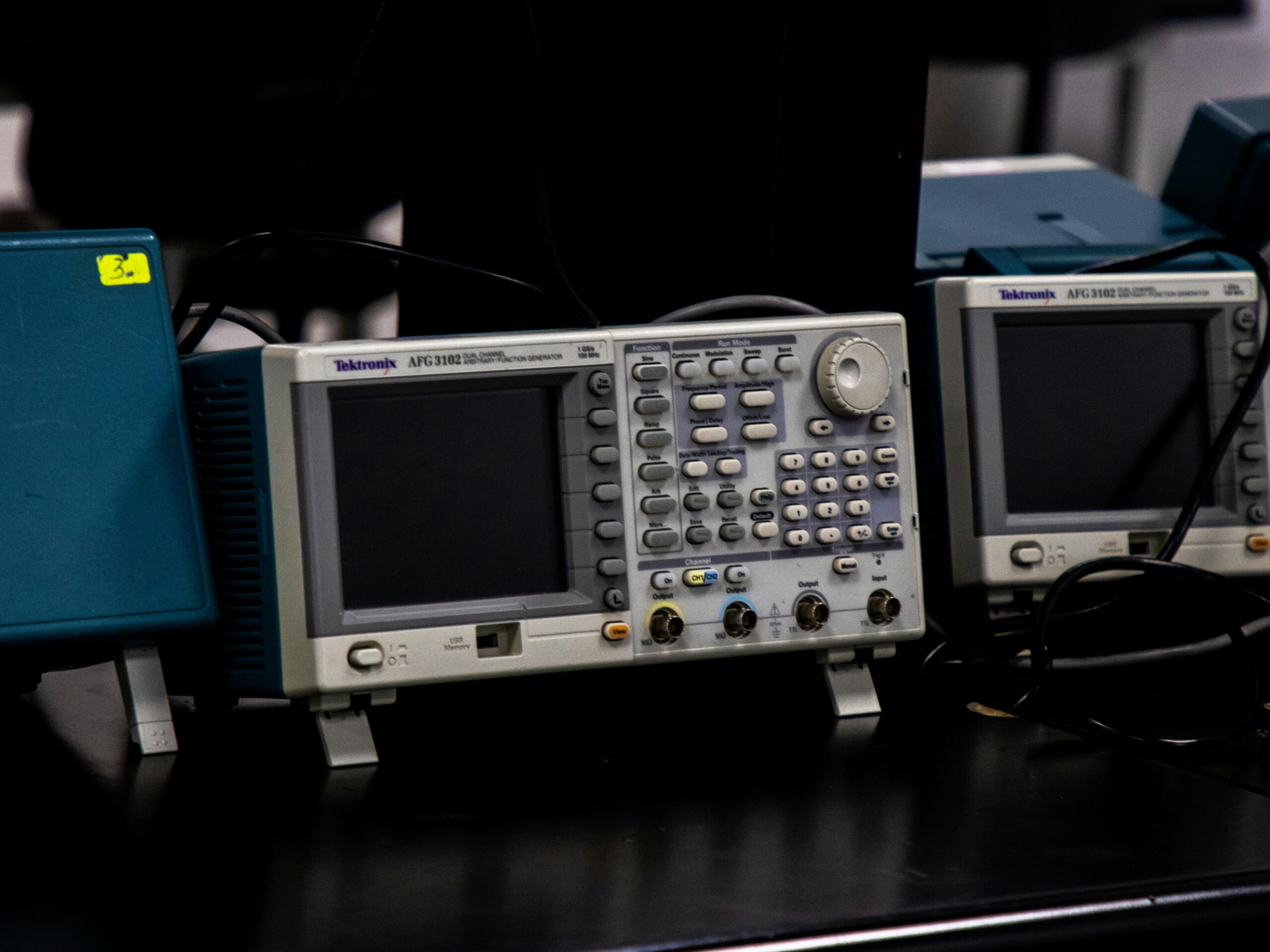
Hardware capacity constraints remain one of the most significant barriers to technological advancement, yet overcoming them continues to fuel breakthrough innovations across industries worldwide. 🚀

The Reality of Hardware Limitations in Modern Computing
Every organization, from startups to multinational corporations, eventually confronts the fundamental challenge of hardware capacity constraints. These limitations manifest in various forms: processing power bottlenecks, memory restrictions, storage capacity ceilings, and bandwidth limitations. Understanding these constraints isn’t about accepting defeat—it’s about recognizing opportunities for strategic innovation.
The rapid acceleration of data generation has created unprecedented demand for computing resources. According to industry research, global data creation is doubling approximately every two years, while hardware improvement rates have begun to plateau. This disparity creates a critical gap that organizations must bridge through creative problem-solving and strategic resource allocation.
Hardware constraints affect different sectors uniquely. Financial institutions struggle with transaction processing speeds, healthcare organizations face data storage challenges with medical imaging, and manufacturing companies encounter real-time processing limitations in automation systems. Each constraint represents not just a technical hurdle but a potential catalyst for innovation.
Identifying Your Organization’s Critical Bottlenecks
Before implementing solutions, organizations must accurately diagnose their specific hardware limitations. This requires comprehensive performance monitoring and analysis across all system components. The identification process should examine CPU utilization patterns, memory consumption trends, storage I/O performance, and network throughput metrics.
Performance profiling tools provide invaluable insights into resource consumption patterns. These tools reveal which applications consume disproportionate resources, when peak demand occurs, and where optimization efforts will yield maximum returns. Without accurate diagnostics, organizations risk investing resources in solutions that don’t address their primary constraints.
Common indicators of hardware capacity constraints include:
- Consistent high CPU utilization above 80% during normal operations
- Frequent memory swapping or out-of-memory errors
- Increasing application response times and user complaints
- Storage systems reaching 85% capacity thresholds
- Network congestion during standard business hours
- Failed backup operations due to resource contention
Strategic Approaches to Hardware Optimization
Optimization represents the most cost-effective first response to capacity constraints. Many organizations operate significantly below optimal efficiency due to legacy configurations, outdated software, or inadequate system tuning. Optimization strategies can frequently unlock 20-40% additional capacity from existing infrastructure.
Software-level optimization begins with code review and refactoring. Inefficient algorithms, memory leaks, and unnecessary processing cycles consume valuable resources without delivering proportional value. Modern profiling tools identify these inefficiencies with precision, enabling targeted improvements that maximize hardware utilization.
Database optimization often yields dramatic performance improvements. Query optimization, index restructuring, and caching strategies can reduce database server load by 50% or more. Since databases frequently represent critical bottlenecks in enterprise applications, these optimizations deliver outsized impact on overall system performance.
Virtualization and Containerization Technologies 💻
Virtualization technologies have revolutionized hardware utilization by enabling multiple workloads to share physical resources efficiently. Virtual machines and containers provide isolation while maximizing resource density. Organizations can consolidate dozens of underutilized physical servers onto fewer, more powerful machines, dramatically improving capacity efficiency.
Container orchestration platforms like Kubernetes enable dynamic resource allocation based on real-time demand. These systems automatically scale applications up during peak periods and down during quiet times, ensuring resources are allocated where they’re needed most. This elasticity transforms fixed hardware capacity into flexible, adaptable infrastructure.
Microservices architectures complement containerization by breaking monolithic applications into smaller, independently scalable components. This architectural approach allows organizations to scale only the specific services experiencing high demand, rather than entire application stacks, maximizing hardware efficiency.
Cloud Computing as a Capacity Extension Strategy
Cloud computing fundamentally changes the hardware capacity equation by transforming capital infrastructure into operational resources. Organizations no longer need to provision for peak capacity that sits idle during normal operations. Instead, they can dynamically access precisely the resources required at any given moment.
Hybrid cloud architectures combine on-premises infrastructure with cloud resources, creating flexible capacity models. Organizations maintain core workloads on dedicated hardware while bursting to cloud resources during demand spikes. This approach balances cost control with capacity flexibility, optimizing both financial and technical performance.
Cloud migration isn’t universally appropriate, however. Certain workloads—those with consistent high utilization, strict latency requirements, or regulatory constraints—may perform better on dedicated infrastructure. Strategic cloud adoption requires careful workload analysis to determine which applications benefit most from cloud deployment.
Embracing Edge Computing for Distributed Performance
Edge computing addresses capacity constraints by distributing processing closer to data sources. Rather than transmitting all data to centralized infrastructure for processing, edge devices perform initial analysis locally, reducing bandwidth requirements and improving response times. This architectural shift is particularly valuable for IoT deployments and real-time applications.
Edge strategies reduce core infrastructure load by filtering and preprocessing data at the periphery. A manufacturing facility might process sensor data locally, transmitting only anomalies or aggregated summaries to central systems. This approach can reduce data transmission volumes by 90% or more, dramatically easing capacity constraints on core infrastructure.
The edge computing paradigm also improves resilience. When processing occurs locally, applications maintain functionality even during network disruptions. This distributed approach transforms network connectivity from a critical dependency into a value-added feature for synchronization and coordination.
Hardware Acceleration Through Specialized Processors ⚡
Specialized processors designed for specific workload types can deliver order-of-magnitude performance improvements over general-purpose CPUs. Graphics Processing Units (GPUs) excel at parallel processing tasks, making them ideal for machine learning, scientific simulation, and data analytics. Field-Programmable Gate Arrays (FPGAs) offer customizable hardware logic for ultra-low-latency applications.
AI and machine learning workloads particularly benefit from specialized hardware. Tensor Processing Units (TPUs) and specialized AI accelerators can train models 10-100 times faster than traditional CPU-based approaches. This acceleration doesn’t just improve speed—it enables entirely new applications that would be impractical with conventional hardware.
Organizations should evaluate workload characteristics against available accelerator options. The following table illustrates common workload types and appropriate acceleration technologies:
| Workload Type | Recommended Accelerator | Typical Performance Gain |
|---|---|---|
| Deep Learning Training | GPU / TPU | 10-100x |
| Database Analytics | GPU | 5-50x |
| High-Frequency Trading | FPGA | 100-1000x latency reduction |
| Video Transcoding | GPU / Specialized Media Processors | 20-50x |
| Cryptographic Operations | Hardware Security Modules | 10-100x |
Data Management Strategies for Capacity Optimization
Data represents both the greatest consumer of storage capacity and one of the most addressable constraint areas. Effective data lifecycle management ensures that storage resources prioritize high-value, frequently-accessed information while archiving or deleting obsolete data.
Tiered storage architectures match data characteristics with appropriate storage media. Frequently accessed “hot” data resides on fast, expensive solid-state drives, while infrequently accessed “cold” data moves to slower, more economical magnetic storage or object storage systems. This tiering can reduce storage costs by 60% while maintaining performance for critical workloads.
Data compression and deduplication technologies reduce physical storage requirements without eliminating data. Modern compression algorithms can reduce storage consumption by 50-90% for certain data types, effectively doubling or tripling storage capacity without hardware investment. Deduplication eliminates redundant copies, particularly valuable in backup and archive systems.
Intelligent Caching Mechanisms 🎯
Caching strategies dramatically reduce demand on backend systems by storing frequently accessed data in high-speed storage tiers. Content Delivery Networks (CDNs) cache web content globally, reducing origin server load by 70-90%. Application-level caches store database query results, eliminating repeated expensive operations.
Cache optimization requires understanding access patterns and implementing appropriate eviction policies. Least Recently Used (LRU) policies work well for general-purpose caching, while domain-specific strategies may yield superior results for specialized workloads. Effective caching transforms hardware capacity constraints into manageable challenges through intelligent data placement.
Performance Monitoring and Capacity Planning
Continuous performance monitoring provides early warning of emerging capacity constraints before they impact users. Modern monitoring systems collect granular metrics across infrastructure components, establishing baselines and detecting anomalies that indicate growing resource pressure.
Capacity planning translates monitoring data into actionable forecasts. By analyzing historical trends and understanding business growth projections, organizations can predict when current infrastructure will reach capacity limits. This foresight enables proactive expansion rather than reactive crisis management.
Key performance indicators for capacity monitoring include:
- CPU utilization trends across time periods and workload types
- Memory consumption patterns and growth rates
- Storage capacity utilization and fill rates
- Network bandwidth consumption and congestion events
- Application response times under varying load conditions
- Database query performance and optimization opportunities
Building a Culture of Performance Consciousness
Technical solutions alone cannot overcome capacity constraints without organizational commitment to performance optimization. Development teams must understand the performance implications of their architectural and coding decisions. Operations teams need authority and resources to implement optimization strategies. Leadership must prioritize performance alongside feature development.
Performance engineering should be integrated into development processes from the beginning, not addressed as an afterthought. Load testing, performance profiling, and capacity modeling should occur during development cycles, identifying potential constraints before they reach production environments.
Cross-functional collaboration between development, operations, and business teams ensures capacity investments align with organizational priorities. Regular capacity review meetings bring stakeholders together to evaluate current utilization, forecast future needs, and prioritize optimization or expansion initiatives.
The Innovation Opportunity Within Constraints
History demonstrates that constraints often catalyze breakthrough innovations. The severe memory limitations of early personal computers led to remarkable algorithmic efficiency. Mobile device constraints drove innovations in low-power processing and efficient networking protocols. Today’s hardware constraints are similarly driving innovations in quantum computing, neuromorphic processors, and novel computational paradigms.
Organizations that view hardware constraints as innovation opportunities rather than insurmountable obstacles position themselves for competitive advantage. These constraints force creative problem-solving, eliminate complacency, and drive efficiency improvements that deliver value beyond simple capacity expansion.
The most successful technology companies have built innovation cultures around constraint-driven thinking. They challenge teams to achieve more with less, reward efficiency improvements, and celebrate creative solutions to capacity challenges. This mindset transforms potential limitations into catalysts for breakthrough thinking. 🌟
Future-Proofing Your Infrastructure Investment
Hardware investments should balance current needs with future flexibility. Modular architectures that support incremental expansion reduce the risk of over-provisioning while ensuring growth capacity. Standardized components simplify expansion and reduce vendor lock-in risks.
Technology selection should consider not just current performance but upgrade paths and ecosystem momentum. Emerging technologies like computational storage, processing-in-memory, and specialized AI accelerators may dramatically reshape capacity economics in coming years. Organizations should monitor these developments while maintaining pragmatic current-generation deployments.
Infrastructure as code practices enable rapid deployment and reconfiguration, making infrastructure more adaptable to changing requirements. Automated provisioning, configuration management, and deployment pipelines reduce the friction of infrastructure changes, enabling organizations to optimize continuously rather than in periodic major upgrades.

Measuring Success Beyond Raw Performance Metrics
Overcoming hardware capacity constraints should ultimately deliver business value, not just technical achievements. Success metrics should include business-relevant indicators: application availability, user satisfaction scores, time-to-market for new features, and total cost of ownership.
Performance per dollar represents a more meaningful metric than raw performance. A solution delivering 80% of maximum theoretical performance at 50% of the cost often provides superior business value than peak performance at premium pricing. Cost-effectiveness analysis should consider operational expenses, management overhead, and flexibility in addition to capital costs.
The true measure of success lies in enabling new capabilities that were previously impossible. When optimization and strategic capacity investments allow organizations to launch innovative products, enter new markets, or deliver superior customer experiences, hardware constraints have been truly overcome. These outcomes represent the ultimate validation that technical efforts have translated into competitive advantage and business growth.
Hardware capacity constraints will continue challenging organizations as data volumes grow and computational demands increase. However, these constraints need not limit innovation or performance. Through strategic optimization, architectural innovation, emerging technologies, and organizational commitment to efficiency, organizations can not only overcome current limitations but position themselves to thrive as technology evolves. The key lies in viewing constraints not as roadblocks but as opportunities—catalysts that drive creativity, force efficiency, and ultimately unlock potential that transforms both technology and business outcomes. 💪